Read the part, then the process
How short shots, sink, warpage, weld lines and flash can inform an injection molding design and process review.
Start with an agreed defect description
Record the resin, tool revision, molding conditions and the location of the issue. Use samples and photos with a clear acceptance standard. An appearance observation alone rarely identifies a single cause.
Short shots: check the filling route
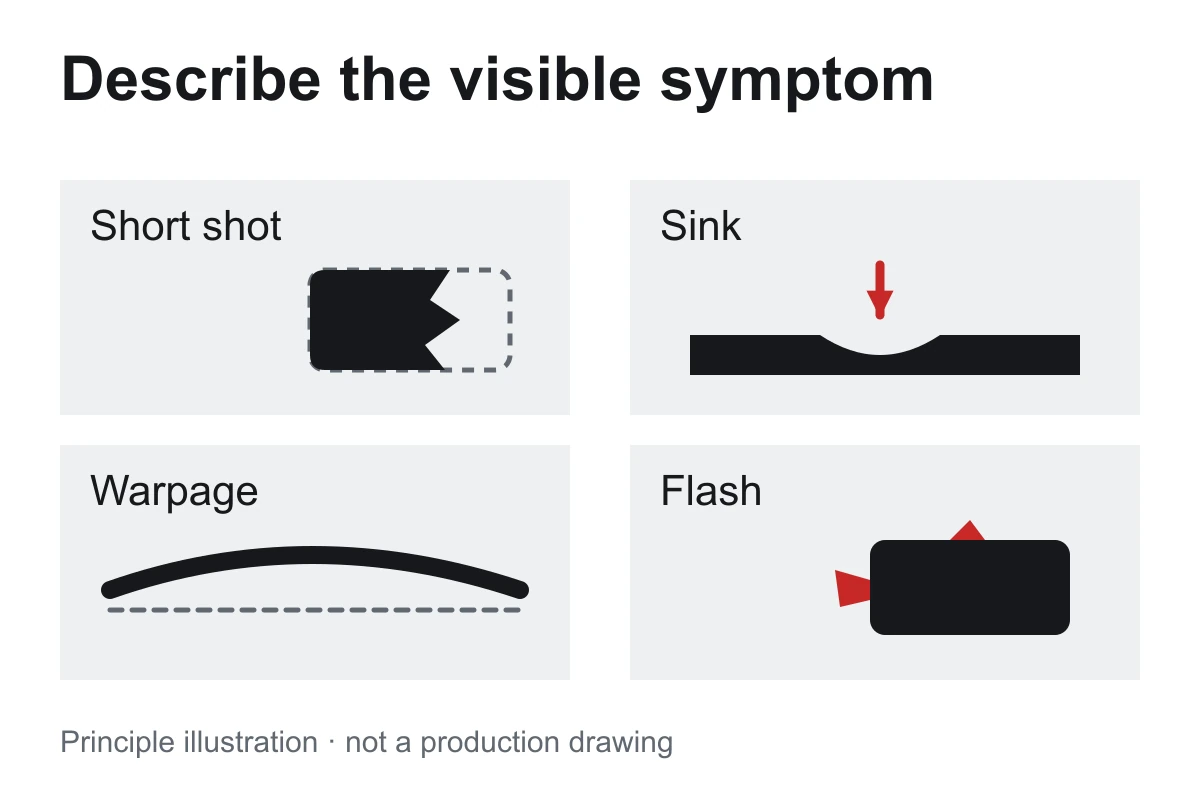
An incompletely filled part can relate to flow length, wall sections, gates, venting, material preparation or the process window. Review where the flow stops and whether the mold can fill the required geometry without exceeding the agreed operating conditions.
Sink and voids: examine local mass and packing
Thick regions and rib or boss intersections can cool differently from surrounding walls. Review geometry, gate sealing, packing and cooling together. Increasing a process setting does not remove the underlying constraint of an unsuitable wall design.
Warpage: compare shrinkage and cooling
Uneven shrinkage can be influenced by geometry, resin, reinforcement direction, packing and cooling. Check where the part is measured, how it is conditioned and which datums define acceptance. Simulations can support a decision, but the sampled part must be checked.
Weld lines and flash: connect appearance to function
Weld lines form where flow fronts meet; their position and functional effect matter. Flash can relate to parting-line fit, vent geometry, tool support or molding conditions. Review affected surfaces and assembly requirements before selecting a correction.
Close the loop with controlled changes
Record the change, sample under controlled conditions and check the relevant dimensions and function. Approval should cover the agreed criteria, not just the disappearance of one visible symptom. For a new project, provide the drawing and requirements so these risks can be reviewed before tooling.
Prepared for the AAA MOULD injection site using the company’s published DFM, material and process information. Guidance is general; project specifications require drawing and material review.
Tell us what you’re making.
Send the part, material and annual volume. We will review the drawing requirements with you.