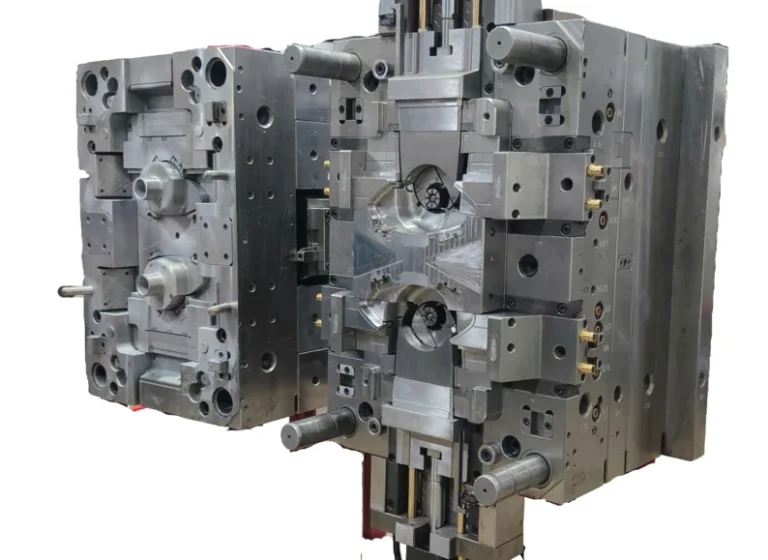
AM0142
Fan component mold
Home & appliances
A fan-component mold reference from the company collection. The source views support a discussion of the required tooling arrangement.
View details
Product review, mold design, manufacture and sampling for plastic injection production and export tooling.
The part defines the cavity, core and release route. Review wall sections, undercuts, cosmetic faces, datums and assembly interfaces before agreeing the tool layout.
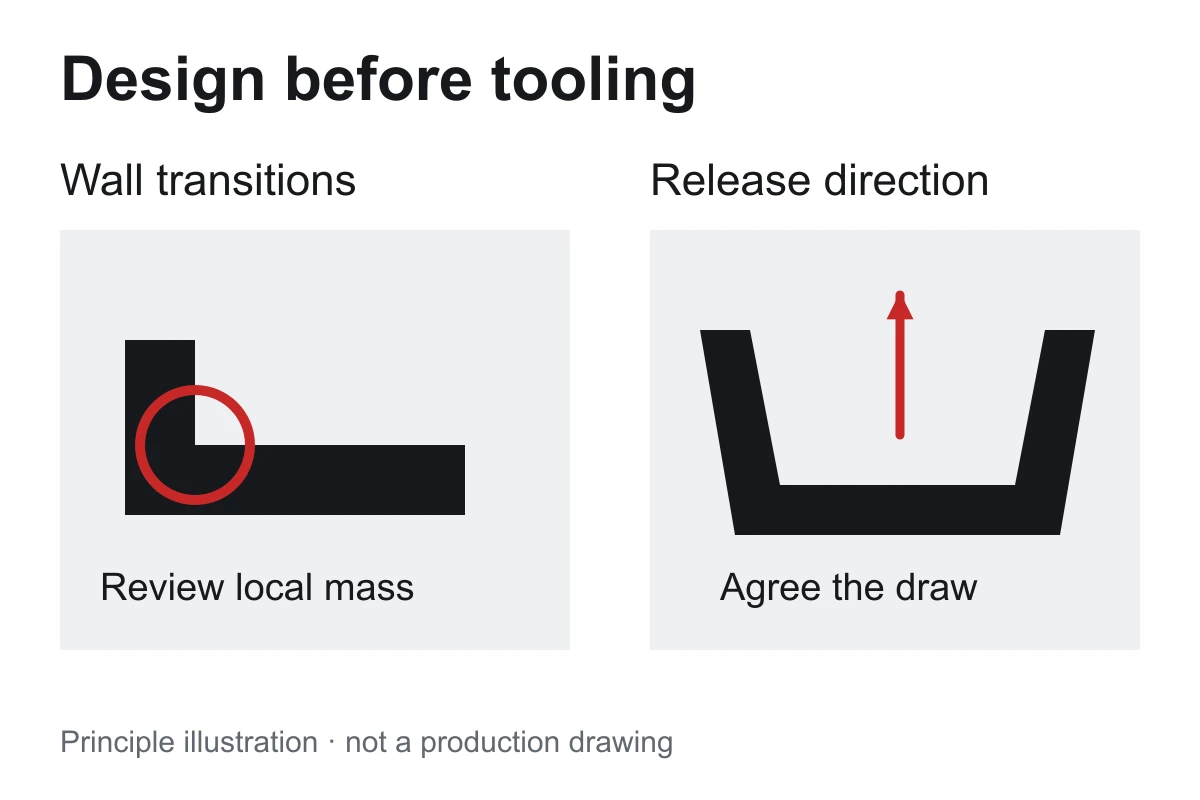
Define the forming faces and release direction. Review slides, lifters or removable inserts where the part geometry requires movement.
Agree parting lines, gate witness and weld-line concerns against the visible and functional surfaces. Review venting and filling with the layout.
Plan cooling around the geometry and mechanisms. Locate ejectors and support so release does not create unacceptable marks or distortion.
Select steel against resin chemistry, abrasion, corrosion, required finish and the production program. Agree specifications and heat-treatment documentation; a steel name alone does not establish tool life.
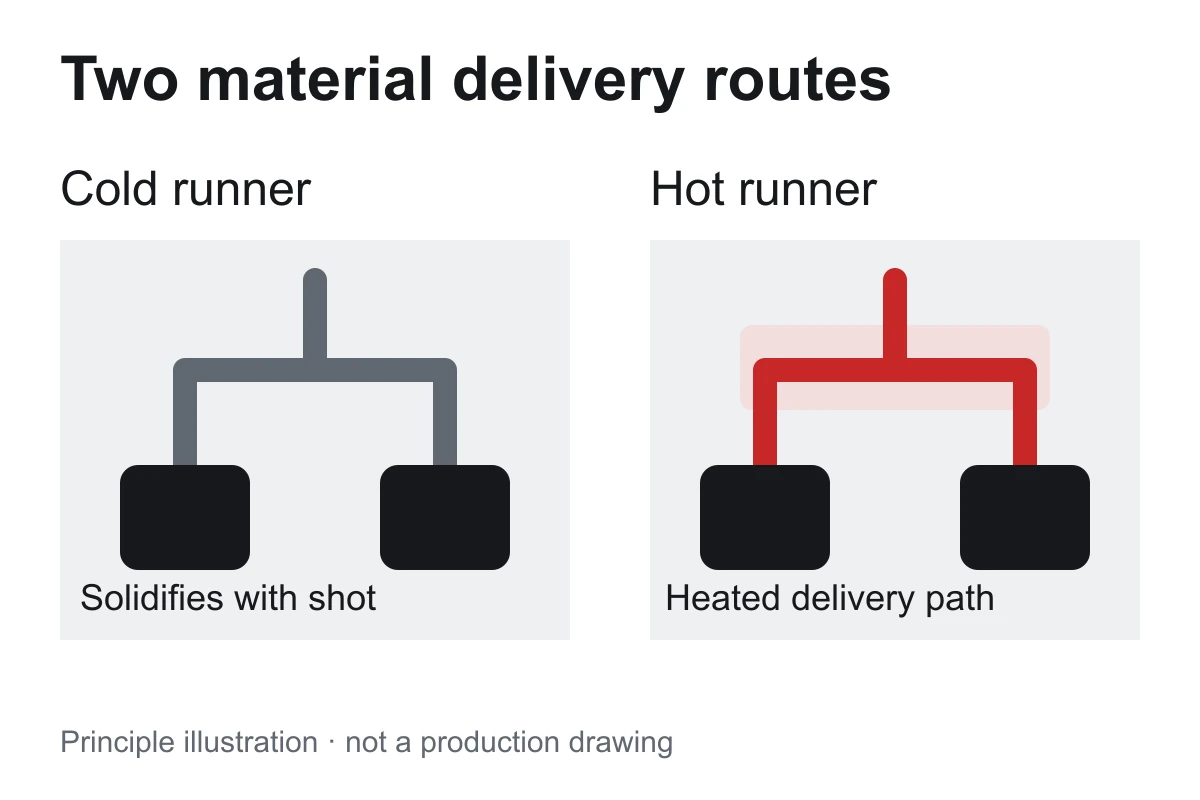
A cold runner solidifies with the shot. A hot runner keeps the delivery path heated. Review the exact resin, gate appearance, color changes, permitted runner reuse and maintenance access before selecting the route.
Plan access to wearing inserts, gates, ejectors and cooling connections. Specify polishing, texture and controlled witness areas before manufacture.
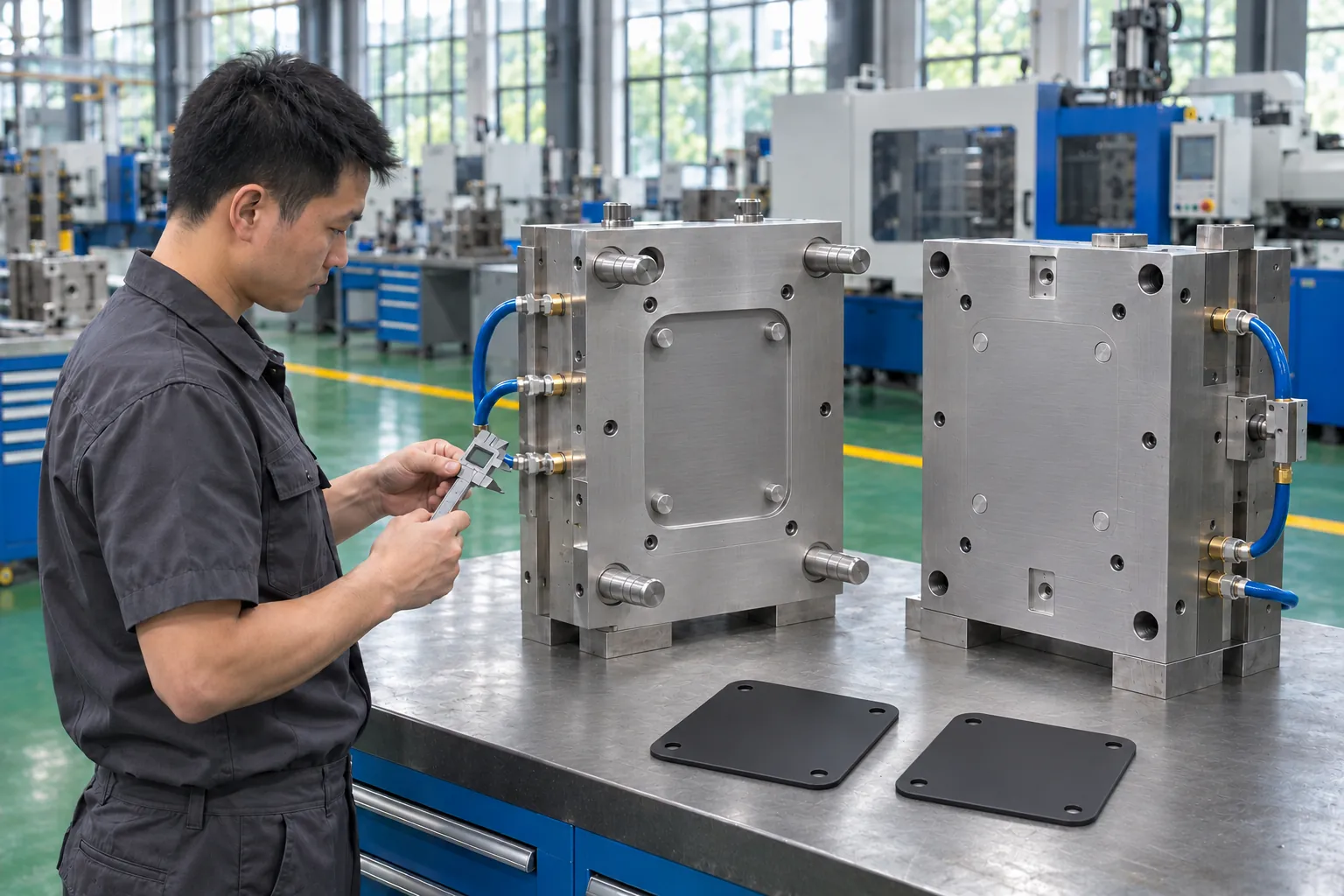
Machine, fit and assemble the mold to its approved revision. Evaluate trial parts against the agreed drawing, appearance and function, then record corrections and the release decision.
For export tooling, confirm machine interfaces, handling, documentation, protection and agreed spares. For local production, confirm the material, setup and repeat-order controls.
AM0142
Home & appliances
A fan-component mold reference from the company collection. The source views support a discussion of the required tooling arrangement.
View details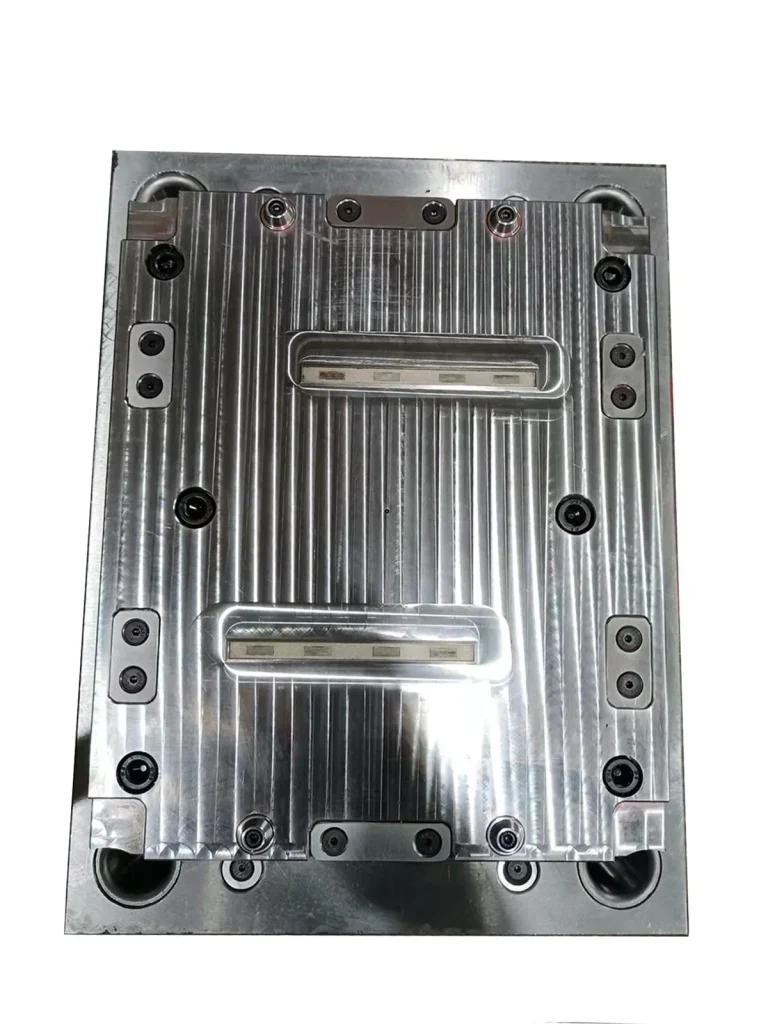
AM0157
Electronics & electrical
Tooling for an electronic housing application, published under reference AM0157. The source photographs show the working regions of the mold.
View details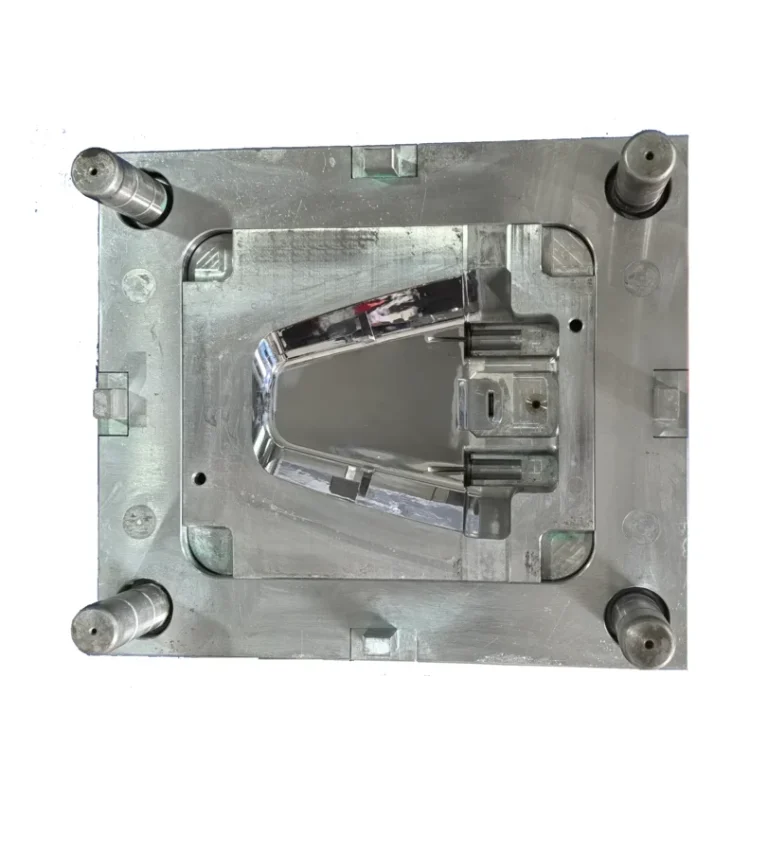
AM0163
Home & appliances
A vacuum cleaner shell tooling example. The source images illustrate tooling for an appliance enclosure component.
View detailsExport injection tooling is included in AAA MOULD’s published projects. Confirm the receiving machine, mold standard, spare parts, connectors and documentation with the quotation.
Send the mold drawings, photos, part samples and a clear description of the issue. Repair or modification feasibility requires a condition review.
Mold ownership, permitted use, maintenance, storage and transfer arrangements are written into the quotation or tooling agreement. Ask for these terms before ordering.
Send the part, material and annual volume. We will review the drawing requirements with you.