
Hot runner or cold runner?
Compare runner arrangements against the resin, cavity layout, volume, gate appearance, color changes and maintenance requirements.
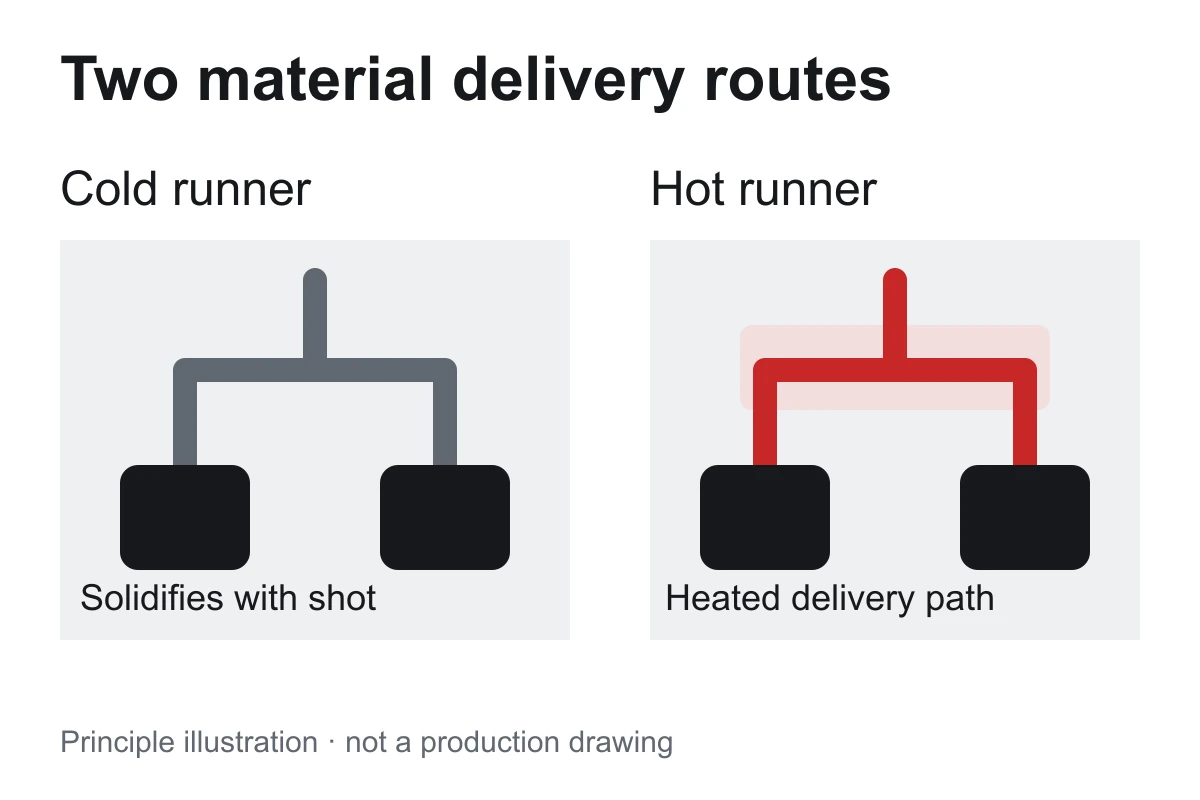
Follow the material route
A cold runner solidifies with the shot; a hot runner keeps the delivery path heated. The comparison should include the component, runner material handling and the conditions required by the selected resin.
Review more than runner waste
Consider tooling complexity, temperature control, maintenance, gate access, separation and the production pattern. The economics depend on the actual component and program, not a universal break-even quantity.
Start with the resin
Material thermal sensitivity, processing window, shear and residence time influence the arrangement. Confirm the resin supplier guidance and the runner supplier’s suitability for the grade.
Agree the visible gate result
Gate type and location affect vestige, appearance and filling. A valve gate or another hot-runner feature should only be specified when the required result and tool arrangement justify it.
Plan changes and maintenance
Color changes, shutdowns, access to wearing components and the receiving molding facility all affect the choice. Document control interfaces, spare components and responsibilities in the tooling brief.
General engineering guidance. Confirm the actual resin supplier instructions, controlled drawing and project acceptance criteria.
Tell us what you’re making.
Share the part, resin, quantity and critical requirements. Reference a catalog item or start from your own drawing.