
Choose the resin before the tool
A practical starting point for choosing an injection molding resin and defining the material grade.
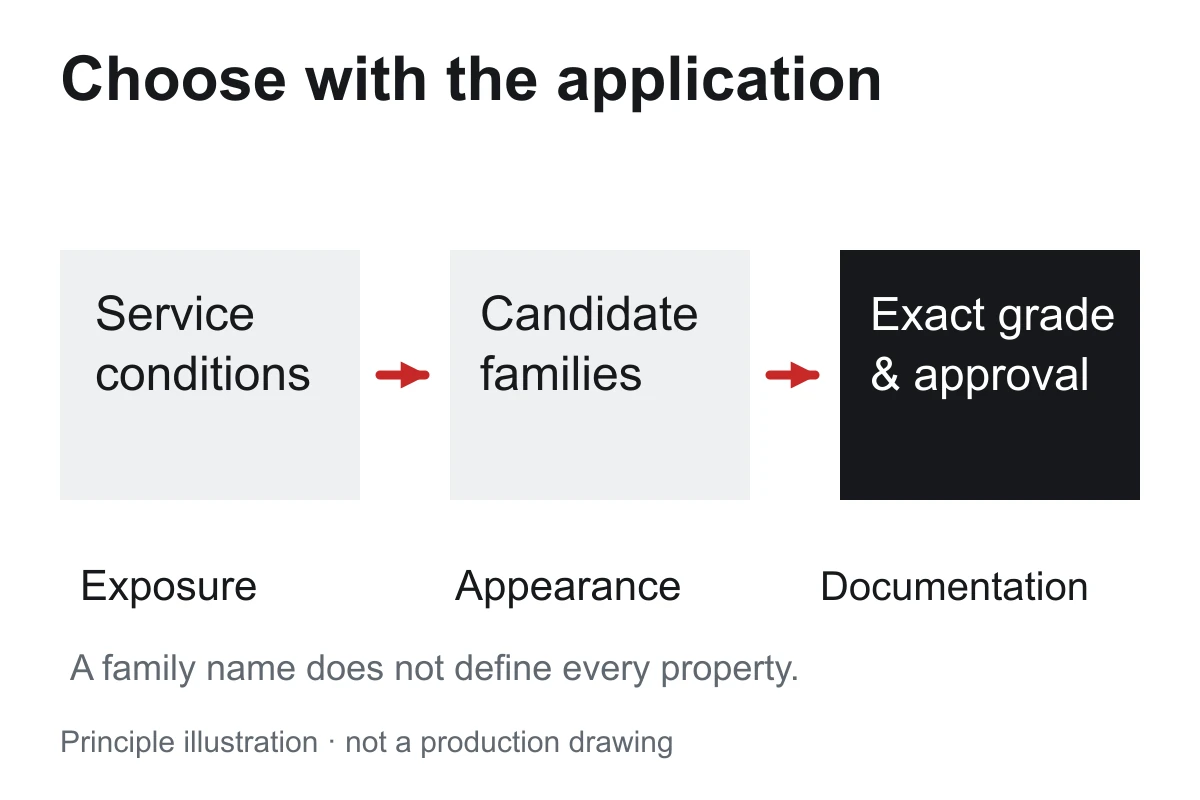
Describe the environment first
List the operating temperature, load, impact, chemicals, moisture and UV exposure. Note whether the part is continuously loaded, repeatedly assembled or used outdoors. These conditions narrow the material choice more effectively than choosing by appearance alone.
Compare material families, then grades
ABS is a common starting point for housings; PC can offer toughness and optical options; PP is lightweight and useful in suitable hinge designs. PA and reinforced grades can serve functional components, while POM is often considered for low-friction parts. TPU and TPE can add flexibility or grip. These are broad tendencies: the grade and its data sheet control the actual properties.
Treat dimensions and conditioning together
Shrinkage, reinforcement orientation and moisture can affect fit and flatness. For moisture-sensitive resins, define conditioning and measurement conditions. Do not transfer a critical dimension from one resin to another without reviewing the tool and part behavior.
Confirm color, finish and multi-material interfaces
A color masterbatch or filler can change processing and appearance. Clear parts need particular attention to material handling and tool finish. For overmolding, confirm compatibility of the exact substrate and overmold grades and agree how bonding will be evaluated.
Document approvals and supply
Specify flame rating, food-contact documentation or other requirements when applicable. A general resin family name does not establish regulatory compliance. Agree the manufacturer, grade, reinforcement, color and any restrictions on reprocessed material before production.
Prepared for the AAA MOULD injection site using the company’s published DFM, material and process information. Guidance is general; project specifications require drawing and material review.
Tell us what you’re making.
Send the part, material and annual volume. We will review the drawing requirements with you.