
Choose the resin for the job.
Start with function, environment and finish. Confirm the exact grade before mold design and production.
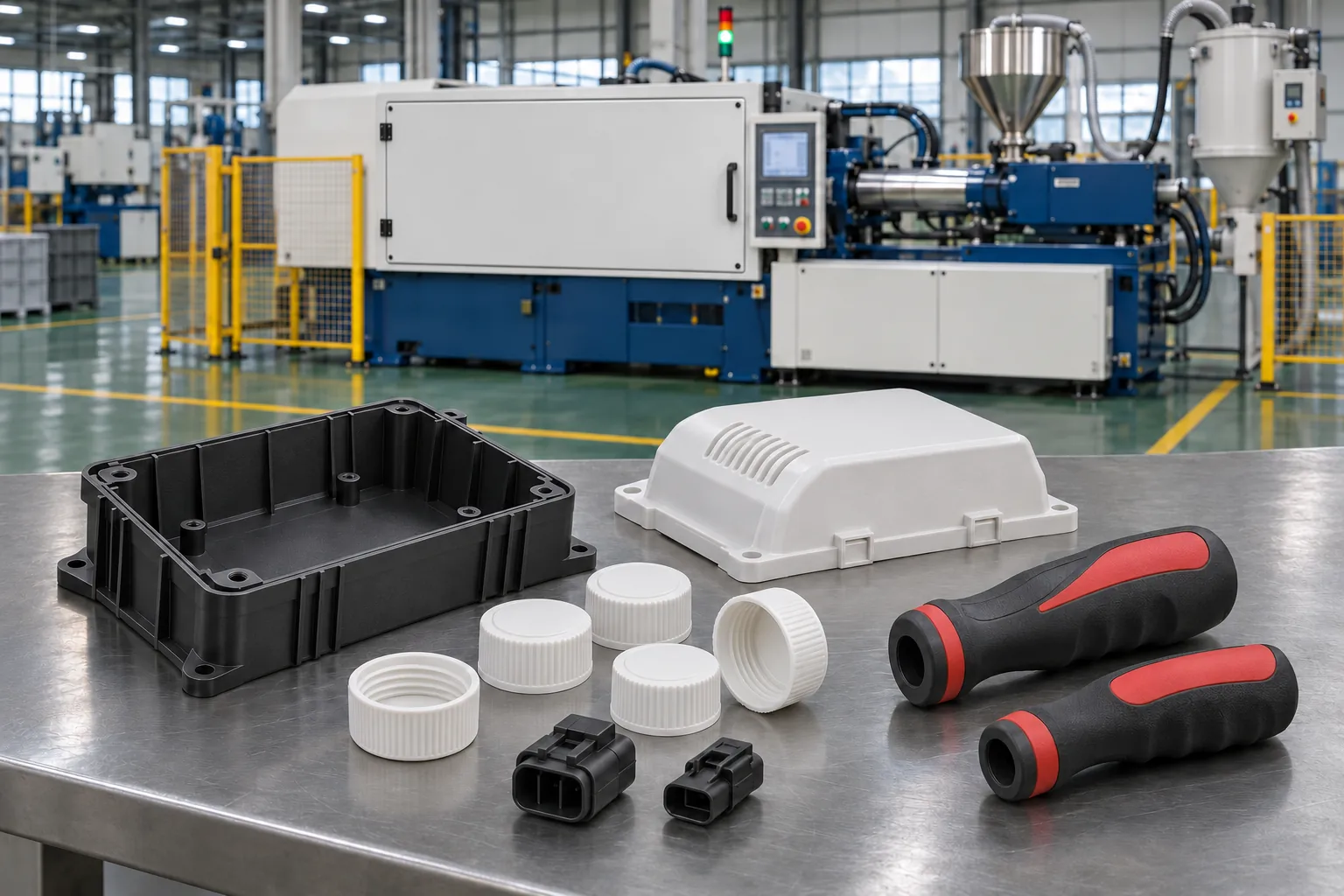
Make material decisions early
Start with the operating temperature, load, impact, moisture, chemicals and UV exposure. Then review appearance, assembly, dimensional behavior and any required documentation.
A photograph or resin family name does not identify the right grade. Confirm the manufacturer, reinforcement, color and permitted alternatives with supplier information.
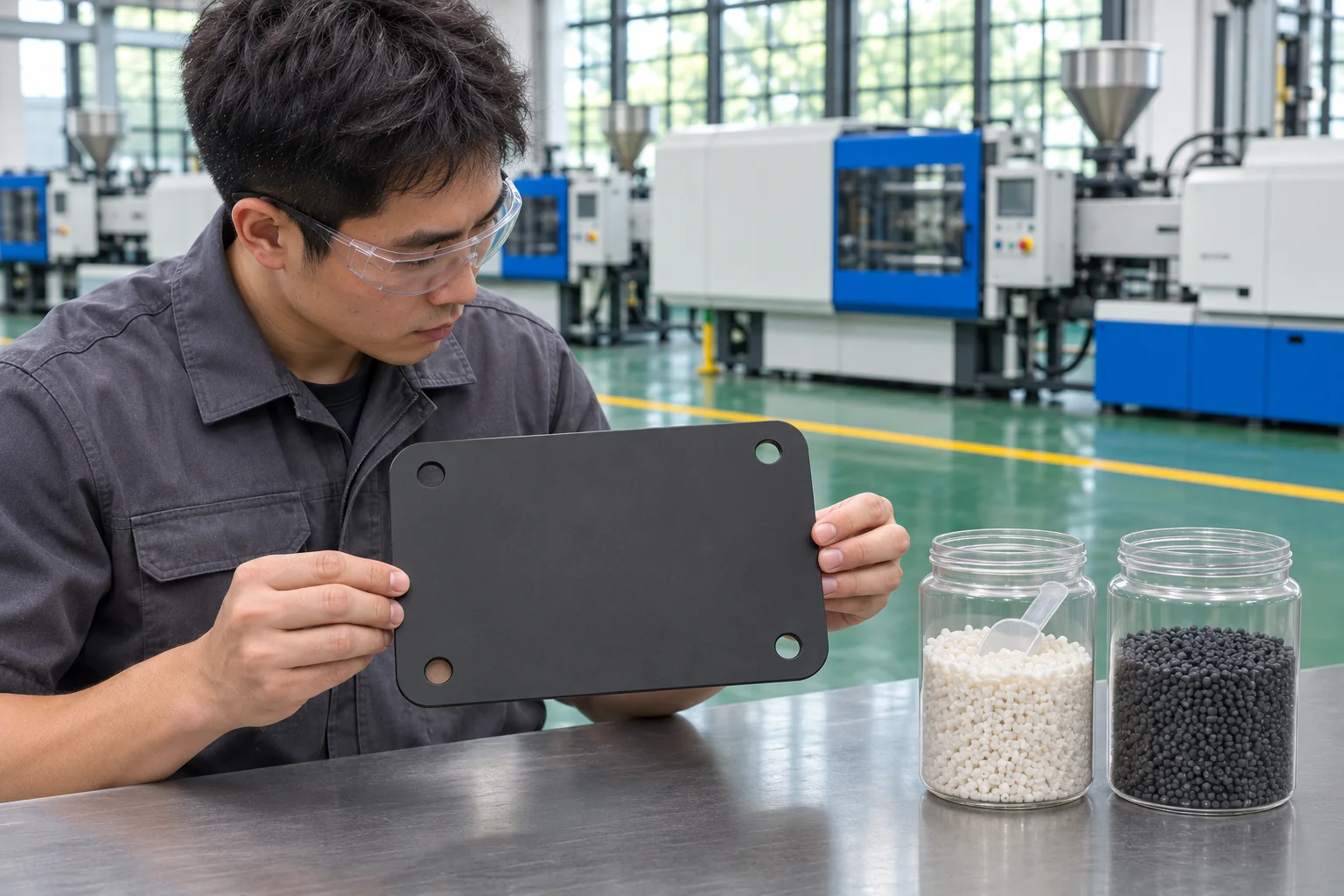
Find a starting material.
Explore common resin families, then confirm the exact supplier grade against your part and its working conditions.
ABS
Typical uses
A starting point for housings, covers and selected consumer parts where appearance and impact requirements need review.
What to confirm
- Balance the visible finish and impact requirements for the actual component.
- Confirm service temperature, UV exposure and contact with chemicals.
- Identify any flame-rating requirement and confirm it for the exact supplier grade.
PC
Typical uses
Consider PC for tough housings, protective components and suitable clear parts, subject to the exact grade and application.
What to confirm
- Review molding stress and the drying requirements for the selected grade.
- Confirm cleaning chemicals, impact requirements and the operating environment.
- Define optical acceptance where a clear appearance is required.
PC/ABS
Typical uses
A starting point for robust housings and enclosure components where the blend grade and required finish need to be agreed.
What to confirm
- Confirm the exact blend grade with the material supplier.
- Review the specified finish, operating temperatures and chemical exposure.
- Identify required approvals before releasing the material for tooling or production.
PP
Typical uses
Consider PP for utility parts, containers and suitable living hinges, with the component geometry and service requirements reviewed together.
What to confirm
- Review stiffness, shrinkage and creep under the expected service conditions.
- Check hinge geometry where a living hinge is required.
- Confirm any decoration, joining or bonding requirements before selecting the grade.
PE
Typical uses
Consider PE for impact-resistant utility components and suitable flexible parts, with the density and exact grade confirmed for the application.
What to confirm
- Review how density and grade affect the required stiffness.
- Confirm chemical exposure under the intended service conditions.
- Agree dimensional requirements for the component before releasing the material selection.
PA
Typical uses
A starting point for functional components, including suitable reinforced applications, where conditioning and dimensional requirements must be agreed.
What to confirm
- Define moisture conditioning for the selected material and its intended use.
- Review reinforcement orientation where a reinforced grade is proposed.
- Agree dimensional acceptance and the conditions used to evaluate the component.
POM
Typical uses
Consider POM for selected moving, sliding and low-friction components, with the actual operating environment included in the material review.
What to confirm
- Define the loads and wear conditions at the working interfaces.
- Confirm chemical exposure for the exact application and grade.
- Review joining methods and assembly requirements alongside the service conditions.
PMMA
Typical uses
Consider PMMA for clear covers, light-related parts and displays, with the appearance reference and intended service conditions agreed.
What to confirm
- Balance optical and weathering needs against the required impact performance.
- Review scratch exposure and stress in the actual component.
- Confirm cleaning agents and the acceptance requirements for visible surfaces.
PS
Typical uses
A starting point for selected rigid trays, displays and general-purpose parts, subject to the required service conditions and component function.
What to confirm
- Confirm whether a general-purpose or impact-modified material is appropriate.
- Review the selected grade against the intended service conditions.
- Agree the component requirements and acceptance criteria before releasing the material.
TPE / TPU
Typical uses
Consider these material families for flexible grips, seals and protective interfaces, with the exact grade and substrate reviewed together.
What to confirm
- Specify the required hardness, recovery and service exposure.
- Check compatibility with the exact substrate grade and interface.
- Confirm the supplier material: TPE and TPU grades are not interchangeable.
These are selection considerations, not a material specification. Approve the exact supplier grade against the actual application.
Specify the whole material requirement
- Supply. Manufacturer, exact grade, reinforcement, color and permitted substitutes.
- Service. Temperature, loading, chemicals, moisture, UV and expected use.
- Appearance. Optical needs, texture and permitted gate or ejector marks.
- Evidence. Required documentation, tests and customer approval conditions.
- Measurement. Conditioning and timing where they affect dimensional acceptance.
Tell us what you’re making.
Send the part, material and annual volume. We will review the drawing requirements with you.